Entries by Špela Gutnik

Recycling of used beverage cartons at Orehek Elementary School

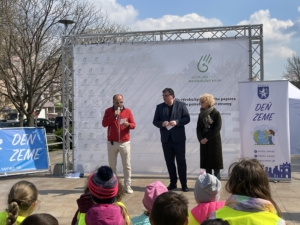
The celebration of Earth day was held at the Orehek Elementary School in May. Children, teachers and local suppliers organized several workshops and presentations of good practice of reuse.


In cooperation with local waste management company Komunala Kranj we presented how to produce paper from used beverage cartons. The primary school and kindergarten Orehek are the first users of recycled hygienic paper from their local Municipal material cycle.


At the end of the celebration, the mayor Matjaž Rakovec and the headmaster Drago Zalar planted a walnut tree on the school jard – as a symbol of a greener future.


Municipal Material Cycle in the video story

The Municipal Material Cycle of used beverage cartons and hygienic paper is now presented in a demonstration video story. It illustrates the integration and cooperation of strategic partners in the cycle.

Video demonstrates this circular economy project on a real case study – it all starts with placing the used beverage carton in the appropriate waste bin, so the municipal waste management company can collect the material and deliver it to the collection center. In the following steps the cardboard from the beverage cartons is reproduced into hygiene paper products. In the final step, the local distributor takes care of the supply and delivery of these products to the local institutions in the same local community.

The main purpose of this video is to demonstrate that there is no need to cut down trees to produce hygiene paper. Used beverage cartons are sufficient enough.

The video was produced in cooperation with our MMC project partners: Osnovna šola Zadobrova, Ljubljana, JP Voka Snaga Ljubljana and Valtex.


Children in Brežice organised the collection of used beverage cartons

In cooperation with Komunala Brežice primary schools and kindergartens in the municipality of Brežice organised the collection of used beverage cartons in April.

The packaging waste collection is an upgrade of the local circular economy program Municipal Material Cycle Brežice, that helps children understand the importance of waste separation, care for the environment and the importance of reuse of materials.

There is no need to cut down trees in order to produce hygiene paper. Used beverage cartons are sufficient. 


In Trnava the Municipal Material Cycle will be presented during Earth Day

At the heart of the Municipal Material Cycle (MMC) project is the local model of circular economy.

The project produces hygienic paper (paper towels, toilet paper), which is exceptional because it is made of cellulose obtained by regeneration of cardboard beverage packaging (so-called tetrapak).

The products of paper thus made may then be used by schools and institutions in the municipalities where the packaging was collected.

In Slovakia, the Trnava City participated in the municipal material circle project among the first cities.

The project promotes sustainable behaviour, because the purposeful collection and processing of cardboard beverage packaging will make the waste a useful raw material for paper production. This saves natural resources, especially it is not necessary to cut down trees, from which hygienic paper is usually made. "We citizens of Trnava care about living in a healthy environment and together we want to lead our children to do so. Therefore, I am glad that Trnava is one of the first cities in Slovakia to participate in the municipal material circle project," said Tibor Pekarčík, Vice Mayor of Trnava.

In Trnava, the Municipal Material Circle (MMC) was established following the model of a successful project in Slovenia, where the first municipalities and institutions participated six years ago. Now MMC is expanding across borders, and the first country to be given the green light is Slovakia.

Partners of the project are FCC Trnava, which provides collection of separate wastes, as well as ENVI-PAK, an organization of producer responsibility for packaging.

Senec established the first MMC in Slovakia

In Slovakia, Senec is the first city that developed the Municipal Material Cycle - closed material loop of locally collected used beverage cartons and recycled hygiene paper for local institutions and companies.

The official start of the project was announced at today's celebration of Earth Day 2022. Local schools, companies and project partners participated at the event and developed a rich programme for children and adults.

At the heart of the municipal material circle project is the production of paper from pulp obtained by recycling collected cardboard beverage packaging known as tetrapaks. Products made of such paper can then be used by citizens in institutions in the municipality where the packaging has been collected, thus creating their own model of the circular economy.

Together with partners: the Senec Municipality the EPR NATURPACK, the waste management company AVE and the paper supplier Damito and Circular Shield the first Municipal Material Cycle in Slovakia has been established.

"There is no need to cut down trees in order to produce hygiene paper. Used beverage cartons are sufficient."


Trnava is encouraging circular economy

The Mayor of the Slovenian Municipality of Novo mesto, Gregor Macedoni, welcomed the representatives of the management of the partner town of Trnava in Slovakia, who visited Novo mesto as part of a study visit on the topic of good practices of the circular economy. They discussed the joint green and circular public procurement of paper hygiene products made from recycled UBC and also other circular economy solutions that are in place in Novo mesto.


After visiting the town hall, the delegation of the city of Trnava also visited the Pedenjped kindergarten, which boasts many projects in the field of the circular economy and enthusiastically spreads ecological awareness among the youngest citizens and their parents.


In an interview, deputy mayors of Trnava Eva Nemčovská and Tibor Pekarčík pointed out that Trnava has been intensively implementing projects in the area of sustainable mobility and the use of technological solutions for the development of a smart city in the last four years, exchanging many experiences with Novo mesto, especially since they are comparable in terms of population. In the area of the circular economy, Trnava is starting to work more actively and they might follow some of the Novo mesto practises that are already showing possitive effects for the local community.

Trnava is about to start the first Slovak Municipal Material Cycle.  


Hand made paper from used beverage cartons

As we like to explore and innovate, we have recently embarked on a new challenge. In the last few weeks we developed a brand new product – hand made paper from used beverage cartons. This new product is a result of the cooperation with JP Voka Snaga Ljubljana and their PapLab team of experts.

Using cardboard part of Tetra Pak beverage cartons that were contributed by Ljubljanske mlekarne, we produced exclusive paper folders that will be used in a protocol event at launching the first Slovak MMC in Senec.


Photo: PapLab, JP Voka Snaga Ljubljana

Circular Shield became the Recycling Hero 2022

We are pleased and proud to announce to partners and supporters that on the occasion of Global Recycling Day on 18 March we have been awarded Recycling Hero 2022 in the start-up category with our project Municipal Material Cycle. 

Ranjit Baxi, Founding President of the Global Recycling Foundation, said: “The world has been enduring exceptionally difficult times and we are delighted to have received so many remarkable entries from around the world. Indeed, to recognise the efforts made by a large number of start-ups despite two years of the Coronavirus pandemic, GRF has decided to make 4 additional awards..”

Circular Shield, Slovenia - supporting sorted collection and recycling of used beverage cardboards, and creating a local, functioning model of circular economy as we return paper products made of regenerated cellulose back to the local community“.

Beverage carton material cycle – environmental and financial advantages for all stakeholders

Closing the waste recycling loop is crucial for the introduction of circular economy. That is exactly what Municipal Material Cycle (MMC) has achieved when it comes to used beverage cartons. The carton part of a beverage carton, which is collected in a certain local community, is repurposed and recycled into hygiene paper products, such as towels, tissues, and toilet paper. These are then used in the same local community. Niko Kumar, Managing Director of Circular Shield, d.o.o., which supervises MMC, has shared with us that the support of the municipality (mayor) and the local waste management company is crucial for the material cycle to be successful in any local community.

The Municipal Material Cycle of beverage cartons and hygiene paper can include municipalities, waste management companies, companies for the collection and management of waste materials, and public institutions in the local community. How many entities are already participating in Slovenia and how could the results be assessed?

The first Municipal Material Cycle of beverage cartons and hygiene paper in Slovenia was established in the Municipality of Novo mesto and seven neighbouring municipalities where waste management is conducted by Komunala Novo mesto. They were followed by the Municipalities of Ljubljana and Brežice. Last year, five municipalities from the Gorenjska region were added to the group at the initiative of Komunala Kranj and the Municipality of Kranj.

How can a certain entity become part of the Municipal Material Cycle?

In order to establish the MMC in a certain local community, the support by the municipality, i.e. the mayor, and the local waste management company is crucial. Take-back systems, the manufacturer or the recycling company, and the local hygiene paper distributor also cooperate. In order to close the material loop and for the MMC to operate, also paper users must be integrated into the material cycle. These are public institutions and companies within the same local community where the used beverage cartons are collected. The most frequent users are schools, kindergartens, municipal facilities, public companies in the municipality, healthcare centres or hospitals, sports facilities, cultural establishments, music schools, libraries, etc. In the areas where the project is already being implemented, around 100 companies and institutions are already using the recycled hygiene paper from their own material cycle.

The market is facing a lack of many raw materials and issues within supply chains, which even underlines the need for the usage of secondary raw materials and the introduction of recycling flows. What are the effects of Municipal Material Cycle and to what extent can it contribute to preserving primary raw materials?

After a bit more than five years since we pioneered the Municipal Material Cycle, we can clearly say that the MMC does not only do what it is supposed to. It is also a circular model with proven benefits and savings. First and foremost, the benefits are environmental since CO2 emissions and the consumption of primary raw materials are reduced. No more trees need to be cut down to get cellulose for the production of hygiene paper products. It is obtained from waste materials from within the local community, which makes this material a precious resource. Environmental benefits are recorded for each MMC separately and published on our website. Also financial savings have been recorded, which are even larger in case of common public calls for tenders. At the same time, our circular model is a response to the raw material crisis.

Pure cellulose is difficult to obtain, and its price is high; therefore, the recycling of the carton part of beverage cartons is not only beneficial for the environment, but also crucial for the long-term management of material and related financial flows as well as stability.

Which challenges are you facing in the introduction and implementation of the Municipal Material Cycle? How does this kind of hygiene paper and other products from recycled beverage cartons meet the criteria of green public procurement and how do they meet the safety and hygienic standards?

The model operates within the existing waste used beverage cartons management system in the local community. No changes are needed here. It is, however, important and necessary that all partners be interested in as well as motivated for introducing such a material cycle. This is the part that is still the most challenging one – it requires a harmonised, cooperative approach as well as a certain change of mindset. We actively take part in all phases and help in the establishment of a partnership among all stakeholders. We take care of controlling the quantities of processed waste packaging and of the quality of the suppliers of final products. Hygiene paper products made of recycled beverage cartons meet all the criteria of green public procurement. Their quality also equals that of products made of pure cellulose, which is substantiated by environmental, hygiene, and dermatological certificates. We have, however, noticed that we will need to keep evolving the cooperative circular culture and boost the trust in recycled beverage carton products since their appearance differs due to the colour of the cellulose – they are not dyed nor perfumed. For consumers, this is actually an advantage. But the market still has not recognised it to the extent one would expect and to the extent necessary if we want to pursue the set environmental goals.

The interview with Niko Kumar Circular Shield CEO was published in EOL magazine 


Circular economy in Novo mesto

In Novo Mesto, they are very active in developing sustainable and circular projects. At the conference named “Circular Economy: from theory to practce” they reported about their participation in the CircLocal project.

Municipality Novo mesto presented the most important achievements in this field in cooperation with local companies and institutions:

  • Kindergarten Pedenjped (principal of Meta Potočnik),
  • e-platform for the exchange of waste resources e-Symbiosis (Urška Fric, PhD),
  • Zavod Knof (Mojca Žganec Metelko).


The head of the CircLocal at the Municipality Novo mesto Peter Geršič presented some examples of best practices, including a joint green and circular procurement of hygiene paper, made from locally collected used beverage cartons from the project Municipal Material Cycle Novo mesto.


With this joint procurement, the municipality set great example for public institutions to take greater and more courageous approach to the execution of green and circular procurements. This way they could help protecting the environment and promote the reuse of local waste materials and secondary sources.


The municipality of Novo mesto will continue to present their efforts and projects in the new website NoviKrog (https://novikrog.si).