The financial analysis of the Ljubljana Municipal Material Cycle programme showed that the cost of purchase of hygiene paper by primary schools that did not decide to join the common circular model was on average 32% higher than that of the primary schools included in the circular model, while in kindergartens this difference was 19%, also in favour of the circular model.
Since 2016, Ljubljana has been implementing the circular programme called the Ljubljana Municipal Material Cycle (MMC), which mainly involves public companies and institutions. By including as many users of hygiene paper from their own material cycle, the circular culture in the local community is strengthened, with a transition from waste management to resource management; environmental and social effects and – as evidenced by the most recent analysis – financial savings are maximised as well.
Institutions and companies participating in the MMC programme are using recycled hygiene paper on their premises that is made from beverage cartons collected locally. The majority of this packaging is high-quality recyclable cardboard. All hygienic paper products from the MMC programme have the Ecolabel environmental certificate, are dermatologically tested and are certified as being safe for contact with food.
Among other public users, at the end of 2018, 22 kindergartens and primary schools in Ljubljana joined the joint green public procurement of the Municipality of Ljubljana for recycled hygiene paper and opted for the circular economy model – Municipal material cycle of beverage cartons and hygiene paper.
A financial analysis of the effects of the circular model in primary schools and kindergartens was carried out after three full (school) years of using recycled hygiene paper from own municipal material cycle. These institutions were chosen for two reasons:
- as part of the above-mentioned joint public procurement, they represent the dominant share of users;
- a control group could be determined for them only – primary schools and kindergartens which were not included in the circular programme during the entire measurement period.
Proven financial efficiency of the circular model
The analysis thus covered a total of 34 public institutions in the period from 1 July 2019 to 30 June 2022 (three school years); in addition to the aforementioned primary schools and kindergartens included in the circular model, there were also 12 primary schools and kindergartens that were not included in the circular model for the entire period. On average, the analysed institutions comprised a total of 22,580 persons annually.
The key finding from the analysis is that the circular model is also cost-effective and that the decision of public kindergartens and primary schools in Ljubljana to join the circular economy programme was reasonable also from the financial point of view.
The comparisons showed that the cost of purchase of hygiene paper by primary schools that did not decide to join the common circular model was on average 32% higher than that of the primary schools included in the circular model, while in kindergartens this difference was 19%, also in favour of the circular model.
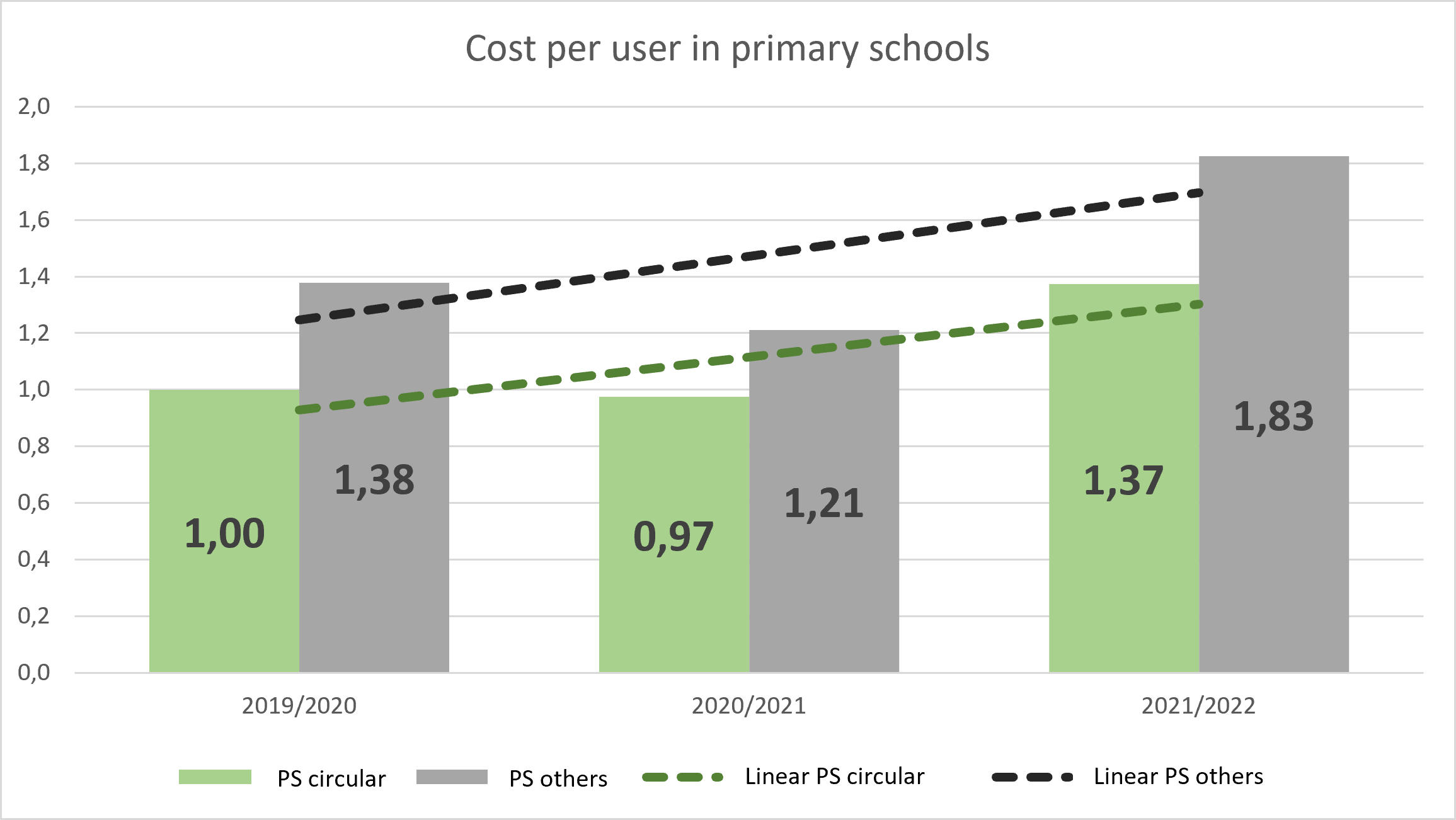
Chart 1: index of the movement of annual hygiene paper costs per user in primary schools: comparison between those included in the circular model and others
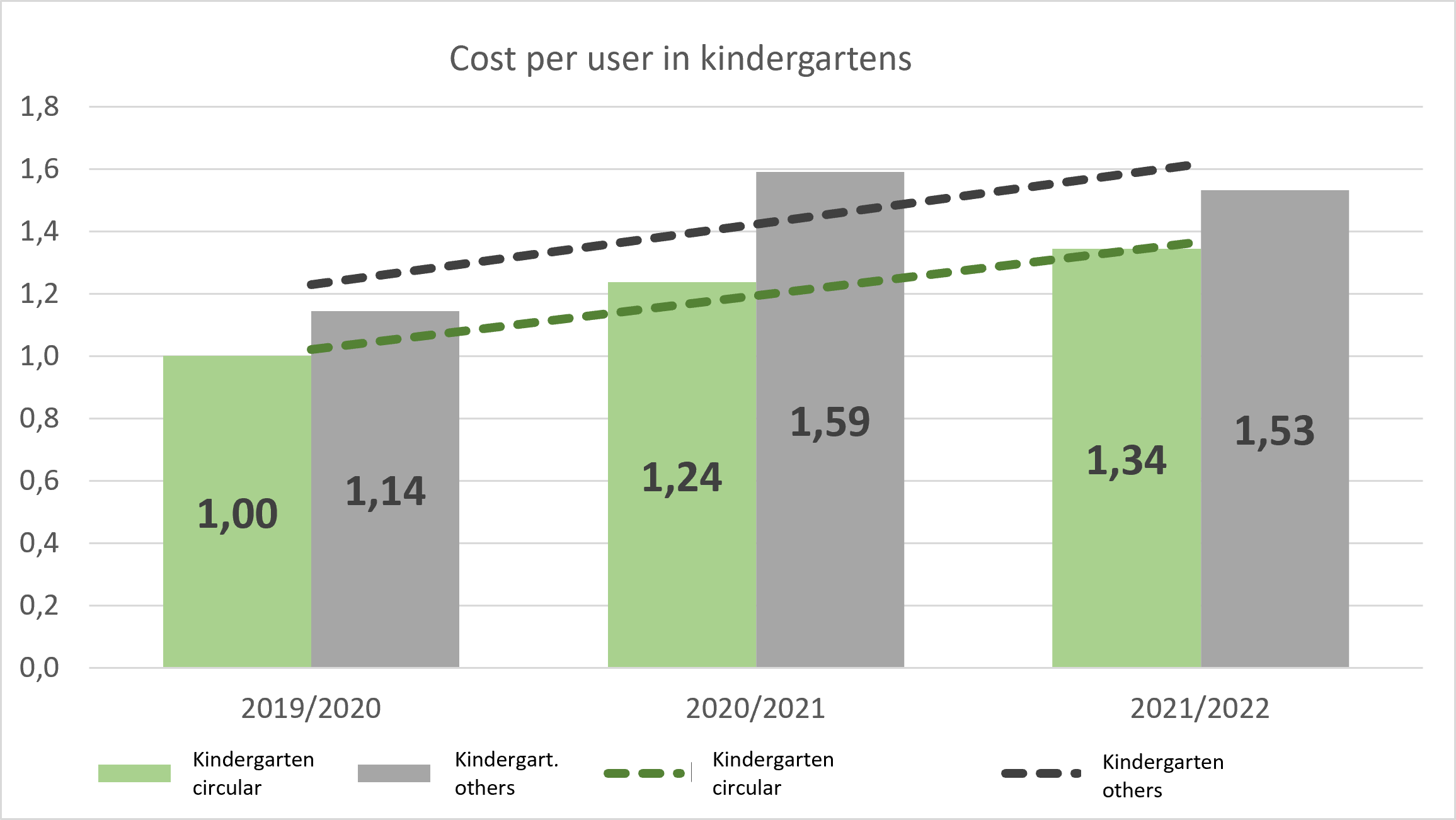
Chart 2: index of the movement of annual hygiene paper costs per user in kindergartens: comparison between those included in the circular model and others
The charts show the movements of cost expressed as an index with an indication of the linear trend. The baseline of comparison (index 1.00) was the cost per user per school year in the first school year, for those who joined the circular model, both for kindergartens and primary schools.
The methodology applied
The cost-effectiveness of the introduction of the circular model in primary schools and kindergartens was carried out based on a comparison of the movement of the cost of purchasing hygiene paper between:
- primary schools and kindergartens which were included in the circular programme for the entire measurement period and purchased hygiene paper as part of the joint green public procurement of the City of Ljubljana (“circular” category)
and
- primary schools and kindergartens which were not included in the circular programme for the entire measurement period and purchased hygiene paper independently of the said green public procurement (“others” category).
The analysis takes into account the costs of hygiene paper and paper towels and wipers, which account for more than 95% of the total cost of hygiene paper in public institutions.
Impact of the Covid-19 epidemic
The measurement period covers the period before, during and after the implementation of measures due to the Covid-19 epidemic. During this period, primary schools were closed for a long time and kindergartens for a short time.
The trend of the movement of hygiene paper purchase costs is very similar in both categories (circular and linear). The costs of hygiene paper are lower due to the period in which primary schools and kindergartens were closed (mostly the second and partly also the fourth quarter of 2020).
Nevertheless, throughout the period from 1 July 2019 to 30 June 2022, an upward trend is notable in the costs of hygiene paper in both categories, which is initially most likely the result of greater need for hygiene paper products due to significantly changed habits and increased attention to personal hygiene during the Covid-19 epidemic. The increase in costs can be partly attributed also to the increase in the prices of hygiene paper products, especially in the past year.
The average annual rise in costs per user in primary schools with a circular model is 20.3% and 20.7% in others. The average annual rise in costs per user in kindergartens with a circular model is 13.7% and 17.4% in others.
Environmental effects of the Ljubljana Municipal Material Cycle programme
The MMC programme is designed as a circular business model, with a great emphasis on achieving not only financial but also positive environmental and social effects. Since its establishment (2016), we have measured the following in the framework of the MMC Ljubljana project:
- 11,767 saved trees (47,068 m2 of forest)
- 904 tons of used beverage cartons processed (2,500 m3)
- 735,113 kg reduction of CO2 emissions
(published data applicable on 31 October 2022).
Detailed environmental effects of the MMC programme in Slovenia are published on the website https://municipal-material-cycle.org/.
A more detailed overview of the MMC Ljubljana project is available at https://municipal-material-cycle.org/ljubljana.
Summary
The financial analysis of the effects on the users of the Ljubljana MMC circular model programme was made with the aim of verifying the cost-effectiveness of using hygienic paper from own material cycle. Primary schools and kindergartens in Ljubljana are included in the analysis, as they represent the predominant share of users, and it was possible to design a control group for them.
The key finding from the analysis is that the programme is cost-effective and that the decision of public institutions in the City of Ljubljana to join the circular economy programme was good.
Lower hygiene paper costs were seen in the period both before and during the implementation of the Covid-19 measures as well as after they no longer applied. During this time, the consumption of hygiene paper grew significantly owing to stricter hygiene measures in primary schools and kindergartens.
The cost of hygiene paper purchased by primary schools which did not decide to join the common circular model was on average 32% higher than that of the primary schools included in the circular model, while in kindergartens this difference was 19% – in favour of the circular model.
Based on the analysis carried out over the past three years, it is estimated that public institutions can expect the circular model to remain a more cost-effective solution for users in the future. At the same time, the programme also ensures that important environmental and social effects are achieved.
The financial effects analysis was carried out by an independent company, a court expert in the field of economics.
The analysis was commissioned by Circular Shield d.o.o., which manages the Circular Economy Programme – Municipal Material Cycle of Used Beverage Cartons and Recycled Hygiene Paper in Slovenia. This programme is already being implemented in more than 15 municipalities in Slovenia, starting with Novo mesto in 2016.
Private or public institutions and companies operating in municipal areas where the municipal material cycle is already established can join the programme individually or as a group.
For more detailed information, write to: info@circularshield.org